TR-49 review: Cracking complex codes reveals shallow answers
This review contains spoilers for the entirety of TR-49.
You have been warned.
“A book,” writes Ray Bradbury in Fahrenheit 451, “is a loaded gun…” In TR-49, the latest game from developer Inkle, that sentiment is taken one further. What if a book was an ideological atomic bomb? Something that can decimate the landscape of the world, scorching the Earth and leaving only devastation in its wake. It imagines art as something inherently violent and therefore in need of regulation or —in this case— destruction.
This is the central mission you are tasked with at the beginning of TR-49. Put in the shoes of an amnesiac woman trapped in a basement with a computer that stores a wealth of forgotten knowledge —decades of books, papers, and correspondence that now only exist in the digital memory of the machine— a man demands you find a dangerous book and wipe it from existence to save the world.
As Abbi, the amnesiac woman, you can have radio conversations with the man, Liam, to tease out more information about what's at stake. This constitutes the second half of Inkle’s description of TR-49: “deductive reasoning meets audio drama.” It is also the weaker half by far. Out of a misguided attempt at fostering a sense of mystery, Liam only talks in extremely vague language. What do we learn about the world outside of this basement? It is nebulously fascist, but Liam insists on playing the pronoun game so much that we never get a true foothold in the world that anchors our mission. Inevitably it means the only real answer to the question “why must we delete this book?” is “because a man told us to!” No further inquiries.
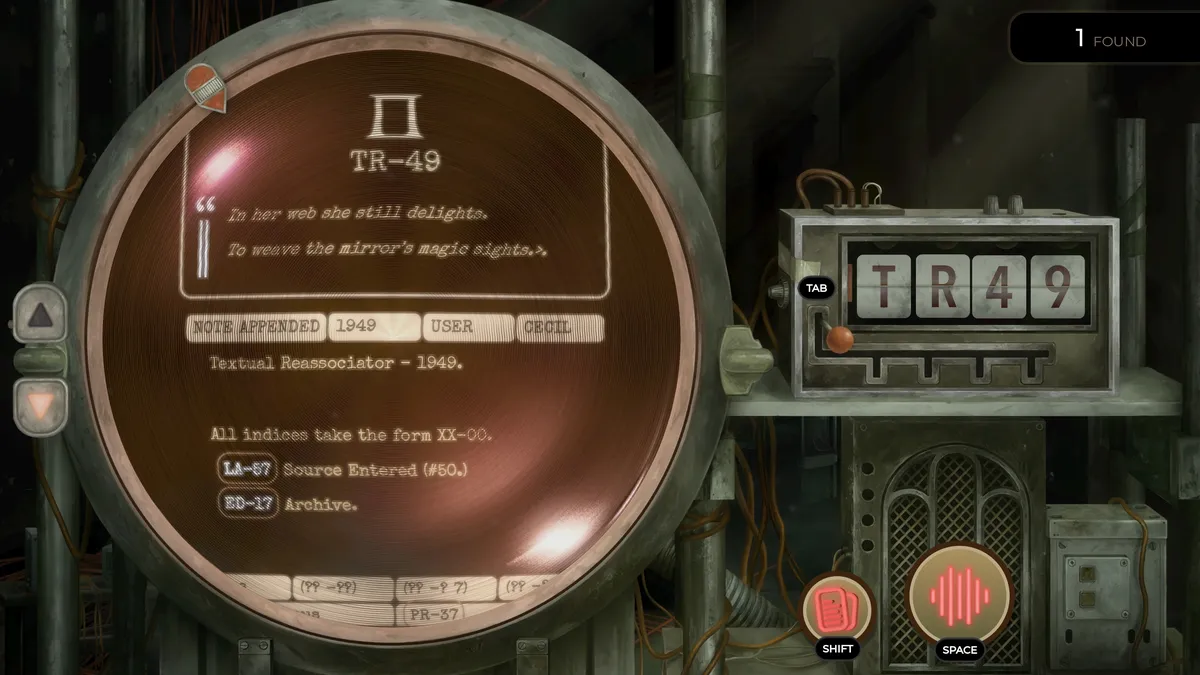
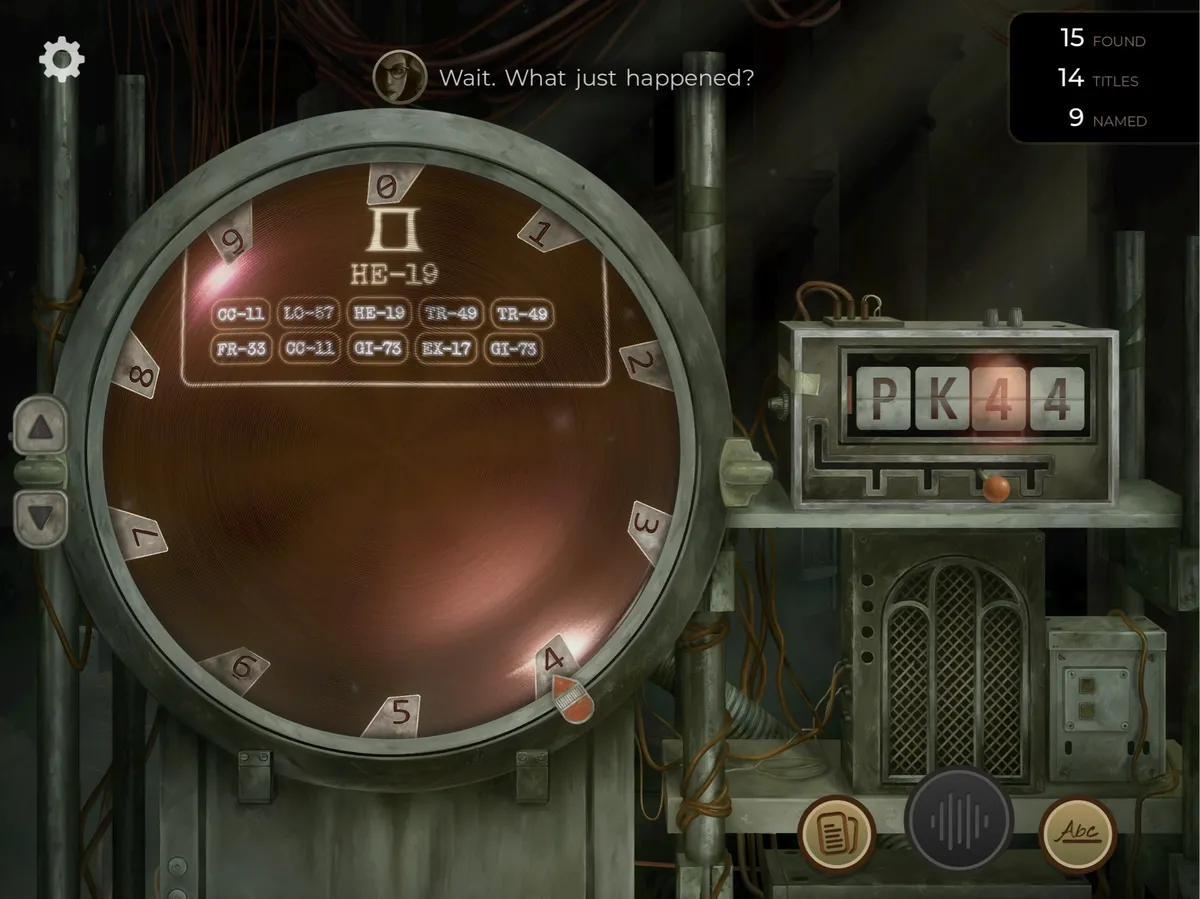
In contrast, the deductive reasoning half of TR-49 is splendid. Sifting through the archives stored within the machine is an inventive take on the trend of deductive puzzle games à la Return of the Obra Dinn and The Roottrees are Dead. As a World War II code breaking machine, the interface is charmingly archaic. Entries in the memory are all linked to a four character code, the first pair being letters and the second numbers. The first step in TR-49 (itself a model of the directory format) is deciphering how exactly to find the files you are looking for.
Once this hurdle is surpassed the world of the machine opens up. This is where the real drama of TR-49 takes up residence. In tracking down Liam’s sought after book, we uncover a web of stories spanning more than a century. Yes the work of artists and scientists are recorded in the machine but so are their lives, the ways they intertwined and influenced each other. Nothing is created in a vacuum and everything builds off of what came before. It is a timeline of entropy, constantly moving forward.
It must be noted that the writing here, of which there is so very much, is excellent. Every voice feels distinct and of its time, while the varied genres —including scientific lectures, literary fiction, emotional diary entries, and even schlocky sci-fi romance— are always buzzing with life and personality. Equally impressive is the way Inkle twists the simple machine interface on its head just when you think you've mastered the system.
But back to those stories. There is an interesting conflict that arises through the process of searching for our book. It is no longer just an object but a representation of a history. We learn about these writers and their internal struggles, the things that drove them to create art and philosophical doctrines as a method of escapism or coping with the realities of the world. So many of these stories, at least the most compelling, center women.
Dorothea Pemberton is a child who will not live past the age of fifteen. Forced to live what little life she has from the confines of her bed, Dorothea finds escape through the reading of new scientific texts on quantum mechanics and more. With nothing to do but think, she becomes one of the preeminent minds on cutting edge science and philosophy. She converses with the other great minds of the world. Whether this is metaphor or fact, a result of her strong will and the power of her writing changing the fabric of reality, is uncertain. What is certain is she dies too young and her work is largely forgotten.
Emma Meyfleur lived a long life but suffered for it. A writer of immense talent, her life is overshadowed by the men that surround her, men who (through the same reality altering effect Pemberton perhaps employed) take away her free will. She is the center of a decades-long feud between two men,both less talented than she. Yet literary critics, for years, read her work through the lens of her lovers and their work. Sometimes going as far as to attribute her work to them outright. Stifled by a terrible marriage and plagued by the horrors of World War II, she writes to escape. Whether or not her work is responsible for setting reality on the path of destruction is uncertain. What is certain, is that she imagined women gaining the freedom she (and so many others) could not.
Aliz and Beatrice Caulderly lived their lives for a man who disregarded them in favor of a machine, the very machine you are tasked with sifting through. Daughter and wife respectively, Aliz and Beatrice could only earn the love of Cecil by taking part in his obsession. Despite being co-creator, Beatrice’s role in the machine is constantly minimized by Cecil in numerous notes that dismiss her frivolous feeding of fiction to the computer. Eventually she saves herself by leaving the marriage. Aliz isn’t so lucky, falling back into her father’s obsession after his death in an attempt to earn his approval from beyond the grave. This costs Aliz to lose herself as well.
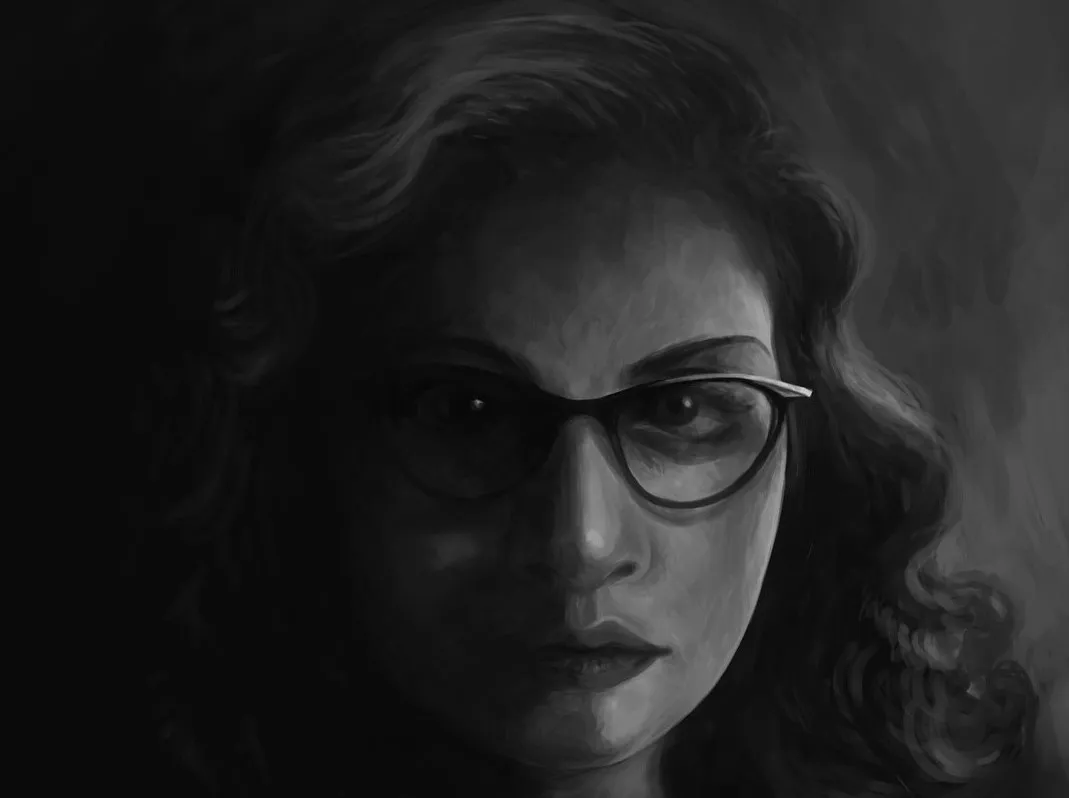
Last in this line is Abbi, still trapped in the basement with only the words of a stranger to go on. With a naive disposition and a cute portrait that appears when talking —showing how adorably bespectacled she is— how are we not supposed to sympathize with her? Of course the twist is that Abbi is not, in fact, in the lineage of women taken advantage of. Abbi is the machine itself. It’s a twist we can see coming from a mile away (why is she amnesiac, why is she stuck in a basement, why won’t Liam answer questions about who we are?) so at least TR-49 has the mercy to reveal this fairly early. But it muddies the game’s themes even further, mostly because it is shallowly engaged with and falls into a boring misogynistic impulse. Of course a computer whose purpose is to serve is a woman.
What TR-49 is trying to say with Abbi is unclear. Are we supposed to empathize with the computer as a woman-identified figure subservient to a man? The game never gives the machine enough depth to imagine a reality in which it would dream of pushing against Liam’s orders. Are we supposed to feel shock at empathizing with a machine, is this a pro-AI game? I honestly don’t think so, but it does not attempt to reckon with the obvious questions about AI that it chooses to raise. I’m left with no other option than to assume TR-49 believes AI is something that should be humanized and given empathy to. Yet I cannot, there are many suffering women that do exist in the world of TR-49. Abbi is not one of them, but it is afforded more empathy.
This is the fatal flaw of TR-49: its inability to meaningfully grapple with the important themes it chooses to weave into the narrative. AI is one example but not the only, fascism is another. The evils of fascism are only told to us in shallow snippets over the radio, but its real violence never finds its way to the basement we are in. It is not enough to be “about fascism” if you don’t have anything to say about it beyond, "it is bad." The current political climate acts as a useful crutch for TR-49 to lean on, without needing to do the legwork. While the complexity of the deductive mechanics is enough to get lost in, it is not a good enough reason to ignore the narrative weaknesses that were not given as much care as they needed.
Through its multiple endings, TR-49 posits that a “good” world necessitates the destruction of art. By erasing a series of works, including those of Dorothea Pemberton and Emma Meyfleur, you secure a future in which Cecil faces no repercussions for his actions and keeps Aliz (and Beatrice in one ending) in his life. Men can defy the entropy of the universe at the expense of the women whose suffering they are complicit in. And who gets to decide what art is too dangerous to exist? In this case it isn’t a who but a what. The machine does.
If you come away with the idea that the machine itself (and Cecil’s obsession with it) should be deleted, this can be done. Yet the game will warn you, "The future is trapped." The machine is necessary. The thing that chews up art but cannot produce anything of its own (beyond mangled facsimiles of something real) is given value. You cannot burn it all down in defiance. "Rewind last action?"
TR-49 does hit on something true, if by accident. Art can be reality-altering. It can influence sudden and violent change. That isn’t always for the worse. And to say that any art, even one that depicts something violent, merits destruction is itself a fascist dogwhistle.
TR-49 is out now on Windows PC and iOS devices. The game was reviewed on PC using a prerelease download code provided by Inkle.