Call of the Elder Gods is pulpy puzzle solving goodness
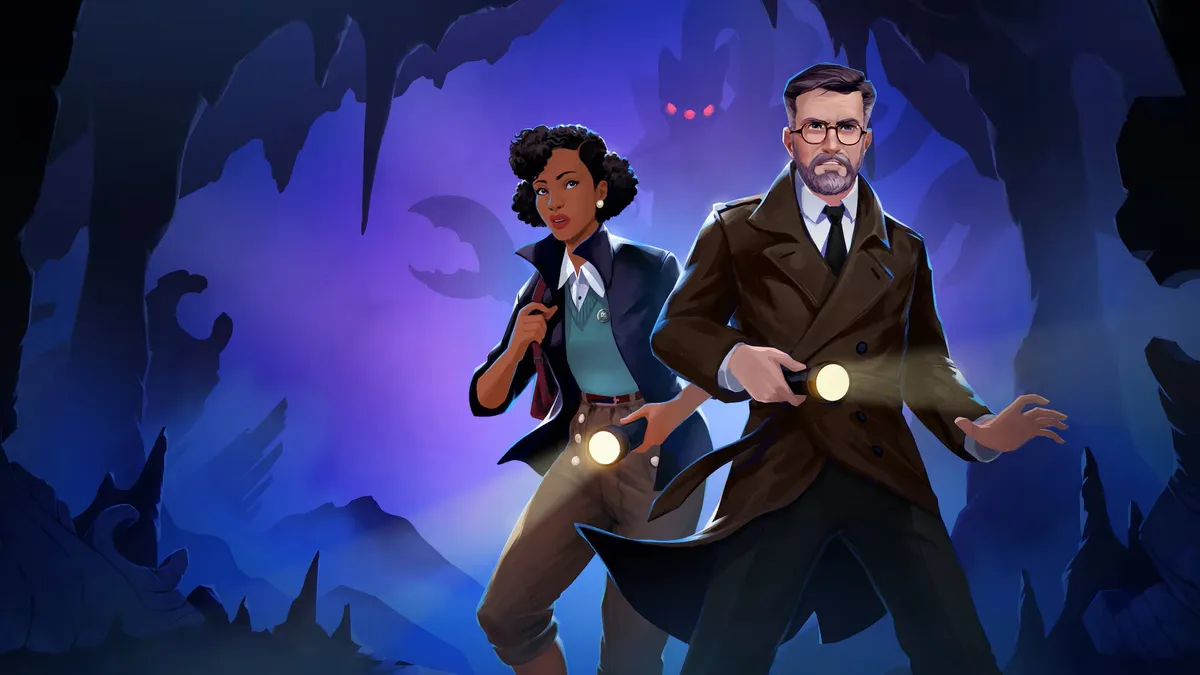
I played 2020's Call of the Sea in one sitting on New Year's Eve. Rather than go out for dinner to celebrate our anniversary, my wife and I ordered a meal from a nice Italian restaurant and bought the game as our night's entertainment. It had everything we love: pulpy adventure, cosmic horror, and challenging puzzles. Much like the plates of pasta we had that evening, Call of the Sea wasn't revelatory but it delivered a comforting meal with little to complain about. Call of the Elder Gods, this year's sequel from developer Out of the Blue, is much the same.
Taking place roughly twenty years after the events of Call of the Sea, newcomer Evangeline Drayton (Mara Junot) finds herself thrust into the same cosmic story that befell Norah Everhart. This brings her in contact with none other than Norah's husband: Professor Harry Everhart (Yuri Lowenthal). The two team up to put a stop to the machinations of a cult intent on… why bore you with the details, they want to do evil. What follows is a globetrotting adventure filled with conniving capitalists, shady psychiatrists, and Nazis.
The mention of Nazis might clue you in on one of Call of the Elder Gods' biggest differences from its predecessor. This is first and foremost a pulp adventure that Indiana Jones would feel at home in, right down to the travel graphics of red lines stretching across old-timey maps. Rather than uncovering the story behind a disastrous island expedition, Harry and Evangeline are hot on the heels of the evil cult trying to wield the power of cosmic entities for their own varying goals.
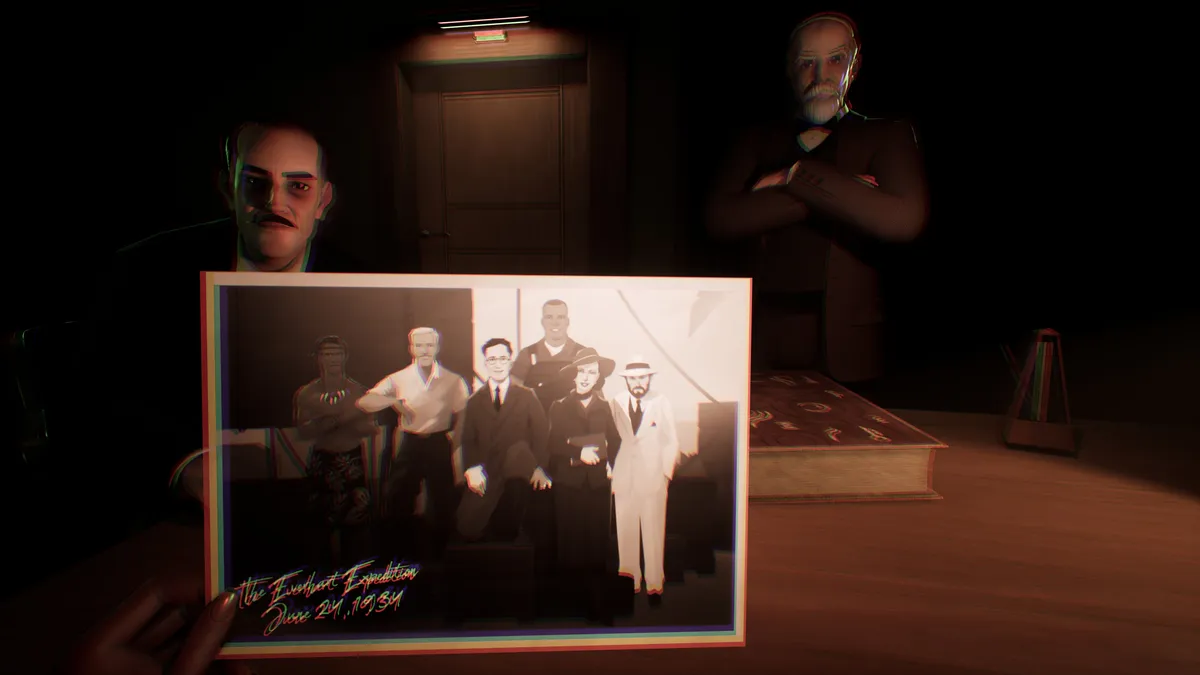
Globetrotting adventure means our main duo aren't bound to one island like Norah was in Call of the Sea. Each chapter (of which there are six, roughly an hour each to complete) takes us to a new beautiful environment that gives Call of the Elder Gods a wonderful sense of scale. From ivy-covered New England mansions to abandoned bases in the snowy mountains of Europe, every biome breathes fresh air into the adventure. This extends to the game's puzzles, which are afforded an exciting variety befitting each respective locale.
And oh the puzzles! Call of the Sea was such a delight in large part due to its challenging but rewarding puzzle design, and Call of the Elder Gods only improves upon that solid foundation. Solving each puzzle requires a combination of environmental awareness, exploration, and real world logical problem solving. As in all good puzzle games, you will feel incredibly dumb right until the moment you realize how everything fits together. This eureka moment never fails to elicit joy.
Very occasionally during puzzle sections you will be given the ability to swap freely between the two as a means of better solving large-scale puzzles. This works in theory but is poorly executed. Perhaps most glaringly because it is only utilized in its entirety in one chapter. Perspective changes throughout chapters are largely done automatically by the game and don't allow for swapping. This leaves the dual protagonist aspect of Call of the Elder Gods feeling out of place. It works narratively, as both Evangeline and Harry are great partners and foils to each other, but mechanically empty. The inclusion of one chapter that does allow for character swapping makes every other puzzle seem, by comparison, like it is missing something.
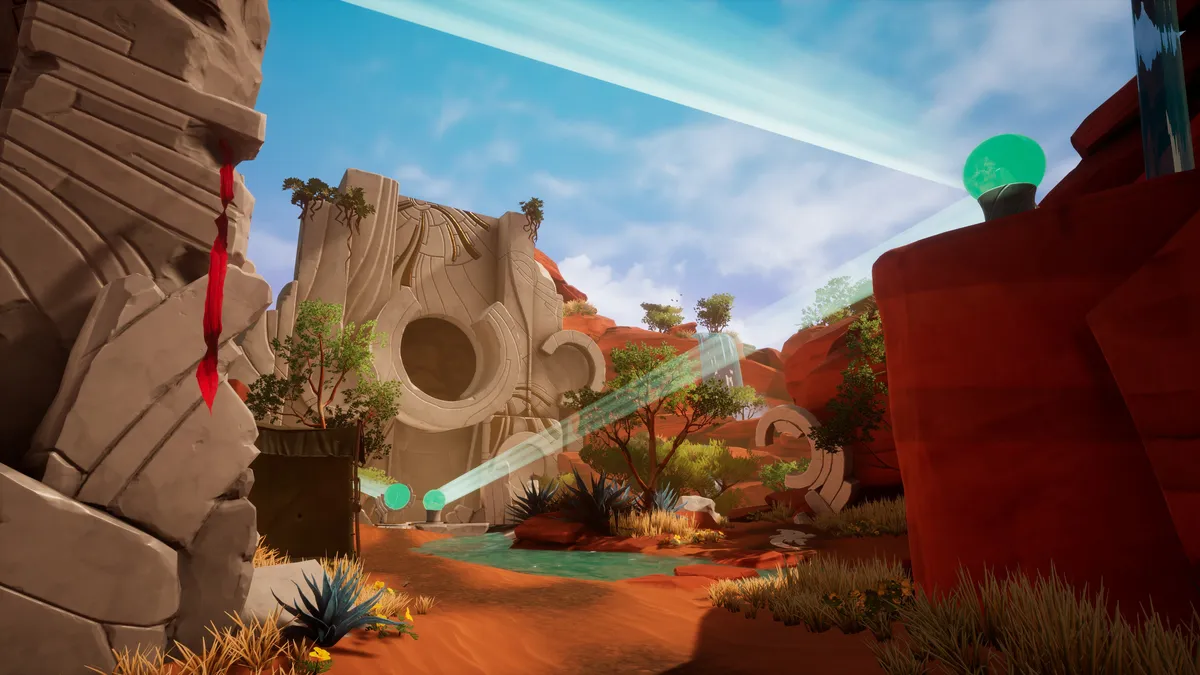
Environments and puzzles pull double duty in Call of the Elder Gods, as they always inform the story as well. A piece of paper clueing you in on how to decrypt a message might also reveal something about the cult you are chasing. This involves a lot of reading, and I relished anytime I found a new scrap of paper because it meant I could continue to piece together events. The in-world writing is good and compelling! Yet the game gets in its own way, as Harry and Evangeline cannot help but comment on everything you pick up to sum up the big takeaway from the newly discovered item. This meant before I even had a chance to read something I was already getting my ear talked off. It's a problem exacerbated by the presence of Norah (Cissy Jones reprising her role) as the game's narrator. Her voice will inevitably accompany almost every event in the game to the point of becoming a grating distraction. Didn’t I already play your story, Norah? Ironically enough her presence made me wish Harry and Evangeline talked for themselves more, rather than just comment on things I wanted to read on my own.
Though the constant buzzing of Norah, Harry, and Evangeline does not ruin the competent story Call of the Elder Gods is telling. The cult is itself so fascinating to learn about that I was still constantly propelled forward despite these annoyances. That is largely true of any nitpick I have with the game. Perhaps the character swapping's poor utilization frustrates me, but the puzzles are still so rewarding! Perhaps environments can at times be too large and empty, but the variety and design of each is so exciting as to overshadow brief moments of boredom. My gripes are minor, and my enjoyment is major. Out of the Blue could continue making these games, and I will continue happily going back for more.
Call of the Elder Gods is exactly what it aspires to be: pulp puzzle solving with a cosmic horror slant. Put on the popcorn and enjoy the ride.
Call of the Elder Gods releases on May 12 for PlayStation 5, Xbox Series X/S, Switch 2, PC. The game was played on PS5 using a prerelease download code provided by the publisher.